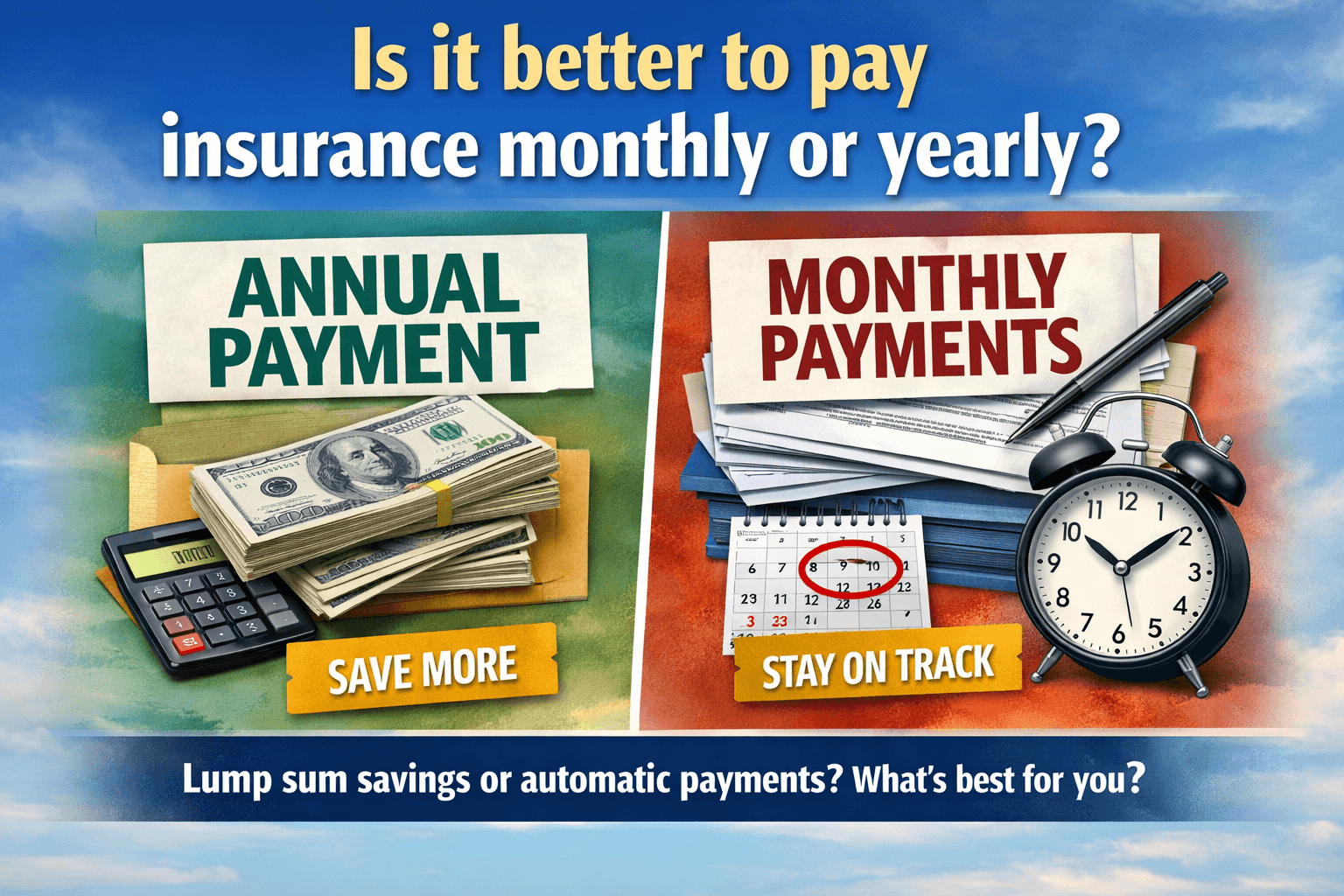
Is It Better to Pay Insurance Monthly or Yearly?
Is it better to pay insurance monthly or yearly? When it comes to purchasing car insurance, one of the first decisions you face isn't about coverage limits or deductibles—it's how to pay the bill. The choice between a large upfront annual payment and smaller monthly installments often comes down to a battle between immediate cash flow and long-term savings.
While paying a lump sum can unlock significant discounts, experts warn that the "cheaper" option carries hidden risks if you aren't careful. According to industry data, most drivers opt for monthly payments to manage their budget, but understanding the mechanics behind these payment structures can help you decide which method truly protects your wallet.
The Financial Case for Annual Payments
If you have the cash reserves available, paying your premium in full is almost mathematically superior. Insurance carriers prefer to have the money upfront because it reduces their administrative costs and eliminates the risk of non-payment. To incentivize this, nearly every major carrier offers a "paid-in-full" discount.
Industry data shows that these discounts typically range from 6% to 14% off your total premium.On a standard policy, this could translate to saving hundreds of dollars a year simply by writing one check instead of twelve.
Beyond the discount, paying annually also exempts you from "installment fees." Many insurers charge a service fee of $2 to $5 (or more) for every monthly payment processed. Over the course of a year, these small administrative charges can add up to an extra $60 or more, on top of the higher base rate you are already paying.
The Hidden Risk of Manual Payments
While the savings are attractive, paying annually (or manually each month) introduces a human element that can be dangerous: the risk of forgetting to pay. If you miss a renewal payment or a monthly invoice, your policy can lapse. In the insurance world, a lapse in coverage is a serious black mark on your record.
When you try to reinstate your insurance after a lapse, carriers view you as a significantly higher risk. Statistics indicate that a lapse in coverage of just 30 days can result in premium increases of 35% or more when you purchase a new policy. In extreme cases, or for high-risk drivers, premiums can double or triple due to a break in continuous coverage.
Why Monthly EFT Might Be the Safer Option
Despite the potential savings of annual billing, many experts recommend automatic monthly payments (Electronic Funds Transfer or EFT) as the "safest" route for the average consumer. The logic is simple: it puts your protection on autopilot.
By setting up automatic withdrawals, you ensure that your coverage never lapses due to a lost piece of mail or a busy schedule. Some carriers even offer a specific discount for enrolling in automatic EFT payments, which can help offset the installment fees.
For many policyholders, the peace of mind is worth the small difference in price. If the cost to pay monthly is only marginally higher—for example, $10 more per month—it may be a worthwhile "insurance policy" against the massive rate hikes caused by an accidental lapse.
How Credit Score Impacts Your Payment Options
Your credit history plays a surprising role in how much you pay for the privilege of monthly billing. Insurance companies use credit-based insurance scores to predict risk, and this extends to payment behaviors.
Good Credit: Drivers with high credit scores are often viewed as reliable payers. They typically qualify for lower installment fees and are readily offered monthly payment options.
Challenged Credit: Drivers with lower credit scores may face higher installment fees or, in some cases, may be required to pay a larger percentage of the policy upfront.
Is it better to pay insurance monthly or yearly? Ultimately, if you have the discipline and the funds, paying annually will save you the most money. However, if you’re busy or worried about missing a deadline, the automatic monthly option provides a safety net that could help you avoid costly rate hikes.
More Resources from Aaron Smith

Allstate vs Progressive Insurance in South Dakota
Compare Allstate and Progressive on auto rates, home and auto bundles, coverage, discounts, and driver profiles in South Dakota.
Learn More

Geico vs Progressive Insurance in South Dakota
Compare GEICO and Progressive for personal auto, commercial auto, home bundles, claims, and discounts in South Dakota.
Learn More